
-
The Summer Olympics in Paris are upon us and it had us thinking about something else the French are known for — their impeccable taste and style. There are several styles of French design including Parisian, French Country, French High-Society, and French Chateau. These styles each have subtle differences, but when done right, all exude a great level of class. Read on to find out how to design with French flair.
DOs
Add Romantic Flourishes
Pay homage to French design by adding floral borders. These ornate flourishes can take on many forms, but the most popular is through wall panels or wainscoting, which is known today as separate panels installed on the upper and lower portions of walls. The paneled interior wall look is quintessentially French, with the most elaborate of designs being popular during the 18th century Rococo era. But if the era’s maximalism isn’t your style, you can incorporate these motifs into a more minimalist space.
Flourishes can also be applied to crown molding or on wallpaper. The popular “Toile de Jouy” pattern, which in French means “cloth from Jouy,” features many flourishes. Jouy was the region where Christophe-Philippe Oberkampf produced the printed patterns.
Use a Soft White as Your Base Color
There is a reason most walls are painted off-white by default. It is a good, neutral blank slate to start decorating with, but also timeless. The French show us exactly how to elevate whites so that it is warm and inviting.
French Country style kitchens are very popular. In this style, there is an emphasis on warm tones, especially ivory and cream colors. Natural materials, soft textures, and aged finishes help create the relaxed, welcoming feel that defines the style. Wood accents, vintage-inspired details, and subtle patterns can add character while keeping the overall look warm and timeless.
Accent with Dark Tones for Contrast
For some drama and an unexpected twist, try pairing light tones with dark ones. A stark contrast of furniture with white walls makes a design feel very modern and Parisian. Dark furniture can ground a bright, airy space, while lighter pieces keep the room from feeling too heavy. You can also introduce contrast through smaller accents, such as artwork, lighting, or textiles, to create depth and visual interest.
Mix and Match Different Textures
The key to an eye-pleasing design is to balance visual weights and textures across the room. Don’t let one area become too crowded and busy while other areas are barren. Consider how the size, color, pattern, and texture of each piece contribute to the overall balance. A large or bold element can often be balanced by several smaller, more subtle pieces elsewhere. The goal is to create a sense of flow, giving the eye enough visual interest to explore without making any one area feel overwhelming.
Go for the Gold
Gilded pieces add a luxurious and extravagant touch to the room. These pieces naturally become focal points as the eye is drawn to their metallic qualities. However, gold should still be used thoughtfully rather than making the entire space feel as if it were touched by Midas. A few carefully chosen accents can add warmth and glamour without overwhelming the rest of the design.
Supersize the Drapes
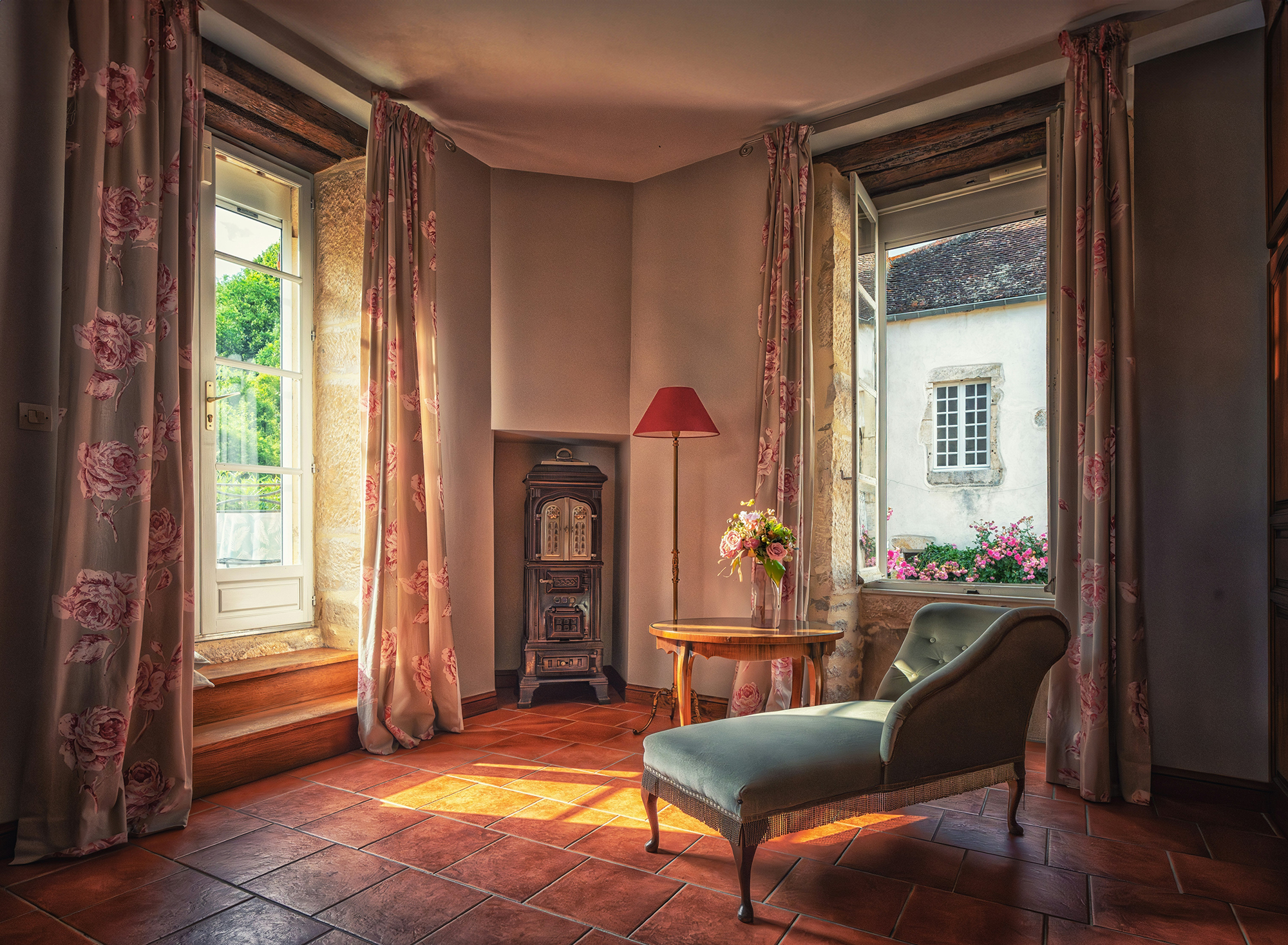
Large windows are often a part of French architectural design. If you have a choice between roller shades or drapes, we say go for the drapes! Curtains bring a soft, yet majestic look to the room and that refined elegance is a key point in French design.
DON’Ts
Poorly Applied Wallpaper or Wall Paneling
Nothing ruins a good concept like poor execution! Paneling may look easy, but there are many nuances involved in the process. For instance, you need to ensure it is applied straight and level. Unlike your standard orange peel wall which is designed to mask imperfections, linear patterns magnify asymmetries and irregularities.
Wallpaper works in a comparable way to panels. Applying it haphazardly will magnify the imperfections on your walls. Make sure your walls are well-prepped and smooth enough before applying wallpaper. Keep in mind that thicker wallpaper can mask minor wall textures. Be sure to check the recommendations from the manufacturer before application.
Go Light on French Icons
There are more inspired ways to highlight French design than graphics of the Eiffel Tower, French phrases, or the French flag. A subtle nod to the style is more effective and timeless than exclaiming, “I love Paris!” Using too many of these French symbols can make your design seem cliche and reminiscent of a themed child or teenager’s bedroom—this is not what you want! Most professionally designed French-style rooms do not have these emblems because good designers believe it’s the details that matter.
Avoid Low-Quality Cabinets and Furniture
This tip applies to any design aesthetic. You will often be able to see the quality in a quality piece. Additionally, the most expensive option does not necessarily mean it is the highest quality or that the price is justified. You must know what to look for to determine a quality piece.
For cabinets and many furniture pieces, the wood used should be thicker and sturdier, made of solid wood, and have nicely finished edges. If the piece has doors, they should also be installed square and even.
A quality piece makes a major difference to the overall look and will make the design look upscale instead of “budget.” So, choose them wisely!
All Design Styles Under One Roof
At The Cabinet Doctors, we have designed and built modern to traditional interiors. From French Country to Modern Industrial, we have an eye for design. We focus on quality and client satisfaction and have a proven track record of happy clients.
As a family-owned business, we provide personalized service instead of a one-size-fits-all approach. Contact us today with any questions you may have or get a quote to begin your project!
Featured Image: A French Country Living Room with Built-In Wall Cabinets – TruKitchens